If you’ve been curious about guided breathwork but aren’t quite sure what you’re signing up for, you’re not alone. Most people hear the word “breathwork” and picture someone breathing quietly in a candle-lit room while a gong plays softly in the background. Maybe some crystals on the floor. A lot of linen.
That’s not what we’re talking about here.
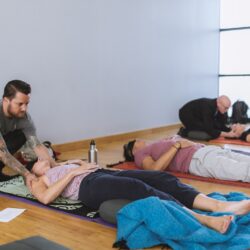
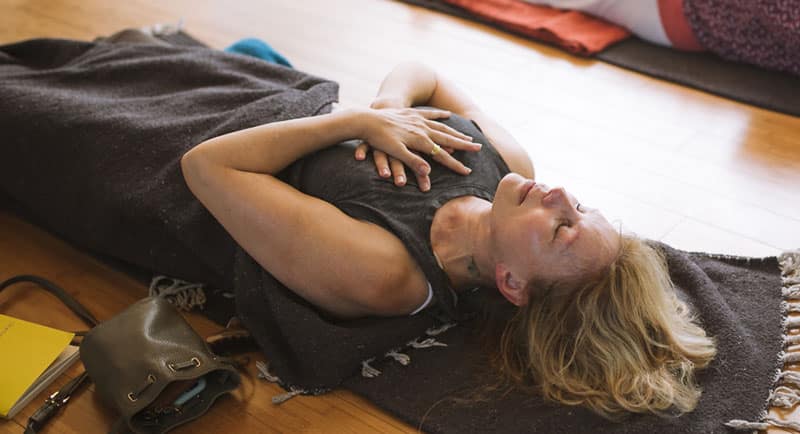
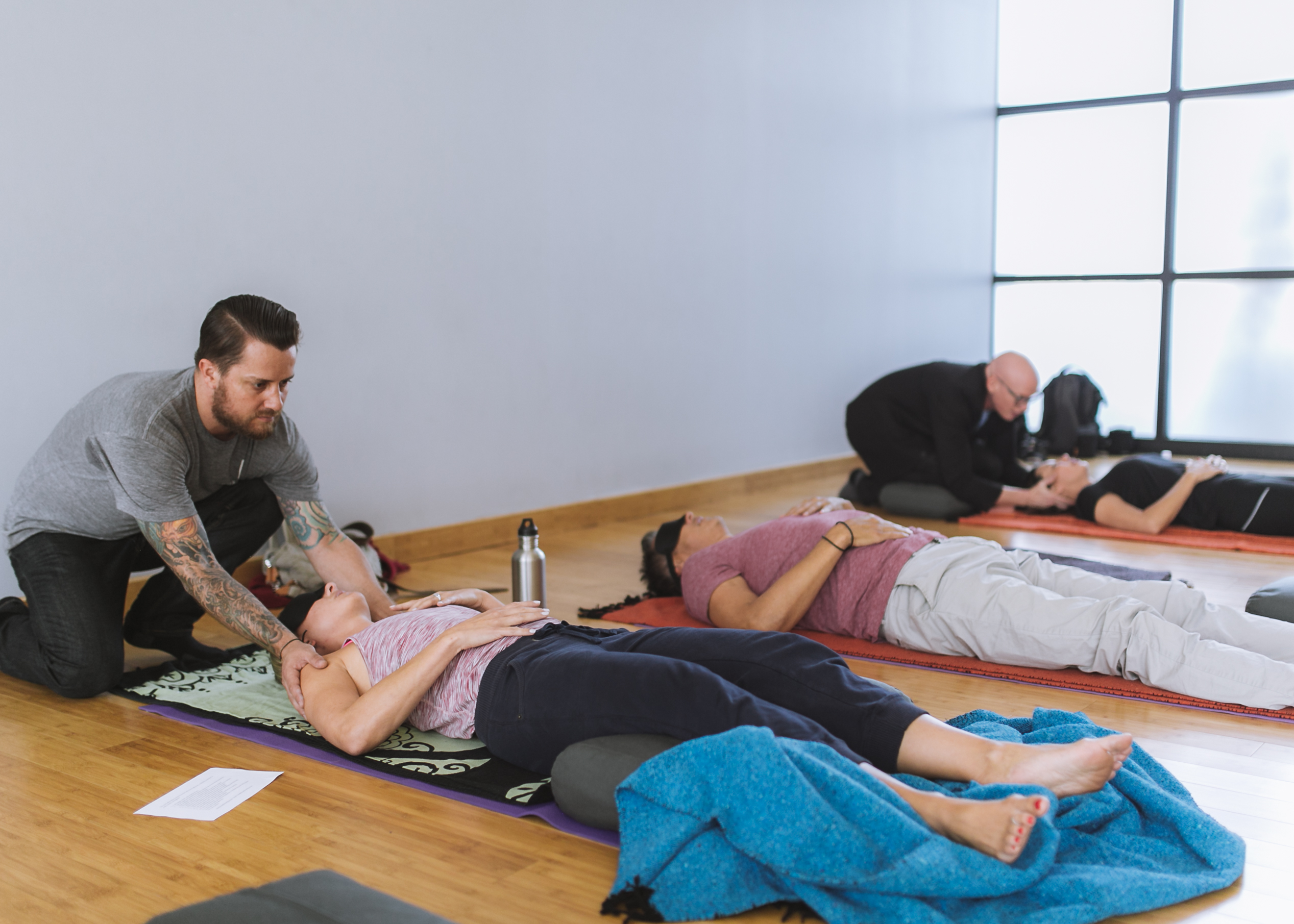
Guided breathwork is an active, intentional breathing practice where a trained facilitator leads you through the entire session. You lie flat on your back, breathe in and out through the mouth continuously, no pauses, no gaps, and someone is with you the whole time, cueing your breath, holding the space, and keeping you in it when things get uncomfortable.
It sounds simple on paper.
It is not a simple experience.
What “Guided” Actually Means
The guided part matters far more than most people expect before they try it.
Here’s what tends to happen when people attempt this on their own for the first time. The moment things start getting intense, the brain sends one clear message, stop. And most people stop.
Not because they’re weak, but because that’s exactly what the brain is designed to do. Its primary job is to keep you safe, which means anything unfamiliar gets flagged as a threat before you’ve had a chance to decide whether it actually is one.
A guide keeps you in it past that point.
When your hands start tingling or an unexpected emotion starts surfacing, the facilitator is there to keep you breathing through it rather than retreating from it. That distinction is everything.
The difference between bailing at the moment things get real and actually staying with the discomfort long enough to get something meaningful out of it often comes down to whether you’re doing this alone or with someone guiding the process.
This is also why so many people specifically seek out guided breathwork when they’re dealing with things that haven’t responded to regular stress management tools. The structured support creates a container for whatever comes up. If you want to understand what that emotional layer looks like when it opens, this post on releasing trauma goes deep on it.
What Happens During a Session
Before the active breathing begins, I walk everyone through the technique so there’s no confusion mid-session. What your mouth does, how the breath connects, what to expect in your body. Then the music starts, and so does the real work.
The active breathing portion runs about 28 minutes. That’s what I consider a full session. During those 28 minutes, your body begins doing things most people have never felt before. Tingling in the hands and feet. Warmth moving through the chest.
Unexpected emotion, sometimes tears, sometimes laughter, sometimes both in the same breath. Occasionally a wave of energy so strong it’s hard to stay still. Other times a calm so heavy that the idea of moving feels impossible.
Here’s what I tell every first-timer, none of that is something going wrong. That’s the practice working exactly as it should. What you’re feeling is your body releasing things it has been carrying for a long time, sometimes years. The sensations are just what that process looks like from the inside.
There’s also a phenomenon called tetany that newer practitioners sometimes experience, where the hands curl or tighten during the session. It can feel alarming if you’ve never heard of it. It’s not dangerous.
It’s a physiological response to shifts in oxygen and CO2 levels, and it resolves as soon as you ease off the breath or return to normal breathing. I always cover this before we start so nobody panics mid-session.
After the active breathing ends, you rest. You stay on the mat and let your body catch up with what just happened.
Do not skip the rest period. It’s not optional.
Why the Brain Fights You (And How to Get Through It)
At around the 10 to 12 minute mark, resistance peaks. The mind starts building a very convincing case for why you should stop.
“This is stupid.”
“Nothing’s happening.”
“I should really respond to those emails.”
Sound familiar? That’s the brain doing its job. It doesn’t care about your happiness or your healing. It cares about keeping you safe, and “safe” to the brain means doing nothing new. This is the same mechanism that kept our ancestors alive on the savanna. It just hasn’t gotten the memo that we’re not running from predators anymore.
Get past that 10 to 12 minute mark and everything changes. The resistant part of the brain backs off, the technique becomes easier to sustain, and the session opens up in a completely different way. I used to tell myself, “It’s just three songs. You can do anything for three songs.” Three songs at 3 to 5 minutes each gets you right through the hump every single time.
That one mental trick changed the entire trajectory of my practice. I mean that.
When I first started doing this consistently, I did it every day for an entire year. Was that easy? Not at first. Not even a little.
But the results were so immediate and undeniable that stopping felt like a worse option than pushing through. My wife told me, “Keep doing whatever you’re doing, because you are becoming an amazing person.” That’s what showing up consistently actually does.
If you want to know how often you realistically need to do this for it to make a lasting difference, I wrote a full honest breakdown in this post on how often to practice. It’s worth reading before you try to build a routine.
What Guided Breathwork Actually Does for You
The most common thing my students say after a session is that it felt like “20 years of therapy without all the talking.” I’ve heard it so many times it’s practically a running joke in class. But it’s not a joke. That’s genuinely what people experience, and there’s a reason for it.
Stress and anxiety are the two most common reasons people show up for a first session. Controlled breathing techniques have been shown to regulate the autonomic nervous system by activating the parasympathetic response, essentially shifting the body out of fight-or-flight and into a state where real relaxation becomes possible.
Anxiety doesn’t just live in your thoughts. It lives in the body, in a tight chest, shallow breath, clenched jaw, and braced shoulders. Guided breathwork works on all of it at once, which is part of why the shift can feel so immediate and so complete.
Beyond anxiety, practitioners consistently report better sleep quality, sharper mental focus, and significant reductions in chronic pain. Most people don’t connect their physical pain to their emotional state, but the link is real.
When you clear the emotional backlog that’s been sitting in the nervous system, the physical tension that’s been holding it in place often releases along with it.
Then there’s the heavier material. Grief with nowhere to go. Resentment that’s been carried so long it stopped feeling like anything. Old anger that never had a proper outlet. Shame and guilt that most people have buried so deep they’ve almost convinced themselves it isn’t there anymore.
Breathwork gives all of that somewhere to go.
This isn’t therapy and it isn’t a replacement for therapy. But I’ve personally watched this practice unlock things in people that years of talking hadn’t touched. I’ve seen it happen over and over, and you can’t manufacture that.
For people working through addiction and recovery, guided breathwork is particularly powerful. The practice delivers the kind of fast, real emotional release that many people in recovery spent years chasing through substances, without any of the wreckage that comes with it.
I know this personally, not just as a teacher. If that’s your situation, that post is worth reading in full.
Who Needs to Check with a Doctor First
Guided breathwork is genuinely accessible. You don’t need a wellness background, a spiritual practice, or even an open mind going in. The skeptics often have the biggest sessions, because they’ve been holding on the longest and they need it the most.
That said, anyone with a history of cardiovascular disease, high blood pressure, seizure disorders, or pregnancy should get medical clearance before starting. Not because this is dangerous in the way the inner critic likes to suggest.
There have been zero reported cases of anything serious occurring from this type of breathwork. Zero. But if you have a pre-existing condition, talking to your doctor first is just the smart and responsible thing to do.
Stop Researching and Start Breathing
A lot of people spend weeks reading about guided breathwork before they ever actually try it. The brain loves research as a way of avoiding the actual doing.
Here’s the honest truth, you can read every article on the internet and still not understand what this practice actually is until you’re in it. The words don’t fully capture what happens when your body starts releasing things it’s been carrying for twenty years. Nothing prepares you for the kind of calm that settles in afterward.
Some people describe it as feeling lighter. Some cry the whole way home and feel incredible when they get there. Some feel raw and tender, like something got moved around that hadn’t been touched in a long time.
All of that is normal. All of it is the point.
One session can produce a real and noticeable shift. Consistent practice is what changes your life over time. Like I always say, don’t take my word for it. You’ll know after the first time you try it, because the results are completely undeniable.
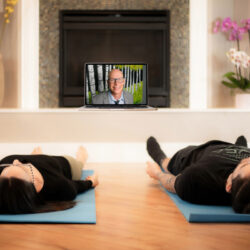
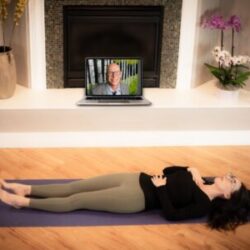
And here’s the practical reality of doing guided breathwork online, you are officially out of excuses. No travel, no studio, no traffic, no parking. Just a mat, headphones, and a quiet space. Breathe with JP runs live online sessions every week, and the access is there whenever you’re ready.
The only question left is whether you’re ready to show up. Guided breathwork will meet you exactly where you are.
Frequently Asked Questions (FAQs)
1. Is Guided Breathwork the Same as Meditation?
Not quite. Meditation is primarily about stillness, observing thoughts as they arise without reacting to them. Guided breathwork is active and physical. Your body is fully engaged throughout the session, and the experience often involves emotional and physical release that sitting meditation rarely produces.
They serve different purposes, and many people find that using both deepens their overall practice considerably.
2. What Should I Do Before My First Session?
Avoid eating a heavy meal for at least two hours beforehand. Set up a flat surface where you can lie down properly, have a blanket within reach since body temperature can shift during the session, and use headphones if joining online. Most importantly, read any preparation instructions your guide sends you before the session starts, not right as it’s beginning. They’re there for a reason.
3. Will Guided Breathwork Feel Intense?
For most people, especially on the first session, yes. You may experience tingling in the hands or face, unexpected emotion, or physical sensations you’ve never noticed before. Some people experience tetany, where the hands curl up during active breathing. It sounds alarming, it’s completely harmless, and it passes quickly.
None of what happens during a session is dangerous. It’s guided breathwork working exactly as it should. The most important thing is to stay with it through the discomfort, because that’s precisely where the results live.
4. How Quickly Will I Notice a Difference?
The majority of people feel a tangible shift after their very first session. That immediate feeling is real, and it’s a big part of why people come back. Deeper, more lasting change, the kind that affects sleep, stress response, and emotional regulation, comes with consistent practice over time. One session hooks you. Showing up regularly is what actually transforms things.
5. Can I Do Guided Breathwork Effectively from Home?
Yes, and online sessions are just as effective as in-person ones when you’re fully present for them. The location is not what determines the outcome. What determines the outcome is how fully you commit to the session.
Lie down properly, use headphones, put your phone away, and treat the time like it matters. Because it does. If something in you is ready to shift, guided breathwork will meet you right where you are.